
Key Takeaways
- Understanding metering panel design is crucial for effective solar power generation and distribution.
- Gayatri Group is a trusted Metering Panels Manufacturer in India, specializing in custom solutions.
- Key components of solar metering panels include energy meters, current transformers, and protective devices.
- Correct CT selection is vital to ensure accurate measurement and data quality in solar installations.
- Proper installation and commissioning checks can prevent operational issues and ensure reliable performance of metering panels.
Gayatri Group, is a leading manufacturer of Metering Panels for industrial, commercial, and power-distribution applications. In a solar power plant, generating electricity is only one part of the electrical system; accurately measuring and monitoring that power is equally important.
For solar EPC companies, electrical consultants, project developers, and industrial buyers, the metering panel must match the plant’s electrical architecture rather than being treated as a standard enclosure. As a Metering Panels Manufacturer in India, we focus on the electrical ratings, metering arrangement, installation environment, and distribution requirements that shape the final panel configuration.
Why Solar Plants Need the Right Metering Panel Design
A solar plant contains several electrical stages between generation and the point where power is consumed or exported. Depending on the project configuration, electrical quantities may need to be monitored at the inverter output, AC distribution section, plant incomer, outgoing feeder, or grid-interconnection point.
The metering panel provides an organised location for measurement and associated electrical equipment. The important design question is not simply whether a meter is required, but what must be measured, at which electrical point, and under what operating conditions.
This makes the metering philosophy an important input before panel manufacturing begins.
What Should Be Defined Before Designing a Solar Metering Panel?
Before finalising a panel, the project team should establish its actual electrical requirements. These inputs influence component selection, wiring arrangement, panel size, and metering configuration.
- System operating voltage
- Maximum expected current
- Incoming and outgoing feeder arrangement
- Metering points required by the project
- CT ratio and meter compatibility where CT-operated metering is used
- Indoor or outdoor installation conditions
- Cable entry and termination requirements
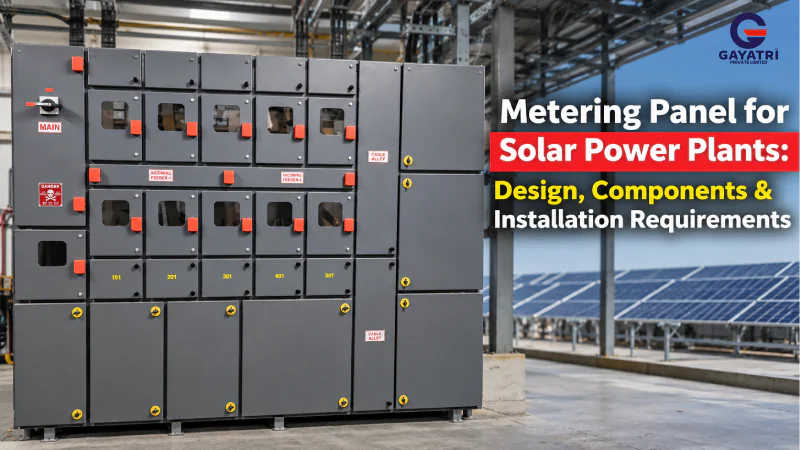
At Gayatri Group, our Metering Panels are specified for metering and power-distribution applications, with a system voltage of 440V AC, rated insulation voltage of 690V AC, maximum rated current up to 1600A, ambient temperature up to 50°C, and IP54 degree of protection.
Key Components Inside a Solar Metering Panel
The specific components required will depend on the project’s design requirements.However, a typical LT metering arrangement may bring together measurement, current sensing, protection, isolation, terminals, and interconnection components within one panel.
Common requirements can include:
- Energy or multifunction metering devices
- Current transformers, as needed for the specified metering arrangement.
- Busbars and electrical interconnections
- Protective and switching devices as specified by the design
- Terminal blocks for metering and control circuits
- Indication and auxiliary components where required
- Earthing connections and cable-termination provisions
Component ratings should be selected according to the actual solar plant electrical parameters rather than copied from another installation.
CT Selection Matters More Than It Appears
In applications where there is a requirement for higher currents, metering of current usually happens with the help of CTs and not by passing the total feeder current through a meter.
It thus becomes imperative that the CT ratio be in line with the primary current and metering equipment selected. Incorrect CT or improper wiring will affect the quality of measurement data that the operator of the plant will have access to.
At the time when buyers contact the Metering Panels Manufacturer in India, they should provide the single line drawing, feeder rating, operating current, and metering setup.
Where Should the Metering Panel Be Located in a Solar Plant?
Not all locations can suit all solar projects. The choice of location will depend on the purpose of the project.
For instance, the placement of a panel in relation to LT AC system can be at the AC distribution or exit point; while other metering point could need to be closer to the electrical connection point of the plant.
Location of the meters will depend on the electrical measurement purposes and not necessarily the first available wall space.
The chosen location will allow for access purposes such as inspection, meter reading, wiring, testing, and even maintenance.
Solar Metering Panel Design Compared to Conventional Panel Selection
The difference is primarily in how closely the panel is matched to the project’s measurement objective.
Design Area | Basic Panel Approach | Solar Project Approach |
Current rating | General load basis | Actual plant/feeder requirement |
Metering | Standard measurement | Defined solar metering point |
CT selection | Generic selection | Based on feeder and meter requirement |
Installation | Available location | Based on electrical architecture |
Cable arrangement | Standard routing | Coordinated with solar AC distribution |
Monitoring | Basic readings | Project-specific energy information |
This is why solar EPC teams should finalise metering requirements alongside the electrical design rather than after major distribution equipment has already been selected.
Installation Requirements That Deserve Attention
Even if the panel is correctly engineered, there can be operational problems when installation is not properly considered.
Panel wiring should be arranged to prevent excessive strain on cables, allow adequate space for maintenance activities, ensure proper grounding, and provide easy access to all equipment for routine inspections.
In projects that involve measurement based on CTs, the installation of the CT secondary circuit must also be paid special attention to. All activities related to CT circuits must be done by qualified electrical workers according to the relevant project guidelines and equipment specifications.
As the Metering Panels Manufacturer in India, we advise that the panel, the meter, CT system, feeders, and the surrounding installation environment be considered as a complete system.
What Should Be Checked Before Commissioning?
Before the metering panel is placed into service, the electrical team should verify the installation against the approved project drawings and equipment data.
- Confirm panel and feeder voltage ratings.
- Verify CT ratio and metering connections where applicable.
- Check terminal tightness and wiring identification.
- Confirm phase sequence and meter connections.
- Inspect earthing and panel bonding.
- Check cable terminations and entry points.
- Verify meter operation and displayed electrical values.
- Confirm that the installed arrangement matches the approved metering scheme.
Commissioning should identify wiring or configuration errors before the readings become part of routine plant monitoring.
Why Choose Us
In Gayatri Group, we make Metering Panels for applications involving metering and power distribution and know that in solar projects, there is a requirement of coordination between ratings of the electrical systems, measuring points, panel construction, and site situations. The specified list of Metering Panels allows ratings up to 1600A at 440V AC, having 690V AC as insulation rating and IP54 protection. We are Metering Panels Manufacturer India catering to buyers who want solutions according to their electrical and project requirements.
Conclusion
A solar metering panel must be chosen depending on the electrical system that is going to be measured. Rating of current, system voltage, CT layout, metering point, cable termination, environmental conditions, ease of installation, and commissioning tests play an important part in the process. At Gayatri Group, it is believed that these criteria need to be specified prior to the designing of the metering panel. Choosing a professional Metering Panels Manufacturer in India provides an opportunity for solar EPC companies, consulting firms, and industry customers to align their metering panels with the overall power distribution design.
Planning a Metering Panel for a solar power plant, industrial solar installation, or LT power-distribution system? Share your electrical requirements, feeder details, and project specifications with Gayatri Group.
Call +91 9375065185 or email marketing@gayatrigroup.org today to discuss your Metering Panel requirement and request a quotation.
Frequently Asked Questions
What are the key components of a solar metering panel?
A solar metering panel typically includes energy or multifunction metering devices, current transformers, busbars, protective devices, terminal blocks, and adequate earthing connections. The selection of these components should be based on the specific electrical parameters of the solar plant.
How do I choose the right metering panel for my solar power plant?
Selecting the right metering panel involves defining your electrical requirements, including system voltage, expected current, metering points, and installation environment. Working with a reputable metering panels manufacturer in India like Gayatri Group can ensure that the panel matches your project’s needs.
Why is correct CT selection important in solar metering panels?
Correct CT selection is critical because it ensures that the current transformers accurately reflect the operational currents in your solar plant. Using the wrong CT ratio can lead to incorrect measurements, impacting your monitoring and overall system management.
What installation requirements should I consider for solar metering panels?
Installation requirements include ensuring proper panel wiring, grounding, and access for maintenance. Special attention should also be given to the CT secondary circuit to comply with project specifications and safety guidelines.
What should I verify before commissioning a metering panel in a solar project?
Before commissioning, you should verify that the installation matches approved project drawings, confirm voltage ratings, check CT connections, terminal tightness, and inspect earthing and bonding. These checks are essential to avoid issues during routine monitoring operations.