
Key Takeaways
- Feeder pillars are essential for organized and safe power distribution across various sectors.
- Choosing a reliable Feeder Pillars Manufacturer in India ensures quality and long-term performance for your electrical systems.
- Critical features to evaluate include current rating, insulation voltage, and temperature tolerance for optimal operation.
- Avoid common mistakes like ignoring environmental conditions to ensure feeder pillars perform reliably over time.
- Select a manufacturer with industry experience and customization capabilities for tailored solutions in power distribution.
Reliable power distribution is one of the most critical aspects of every industrial, commercial, residential, and infrastructure project. Electrical systems are expected to operate safely while supplying continuous power to various equipment, lighting systems, machinery, and utilities. One of the most important components responsible for achieving organized and protected electrical distribution is the feeder pillar.
A feeder pillar acts as a central outdoor electrical distribution panel that receives power from the main source and distributes it across multiple outgoing circuits. It plays an important role in improving electrical safety, simplifying maintenance, and supporting uninterrupted operations. Businesses searching for the Feeder Pillars Manufacturer in India often prioritize quality, durability, safety, and long-term performance. Likewise, organizations looking for the Best Feeder Pillars Manufacturer in India seek trusted manufacturers capable of delivering customized electrical solutions for different applications.
What Are Feeder Pillars and Why Do They Matter?
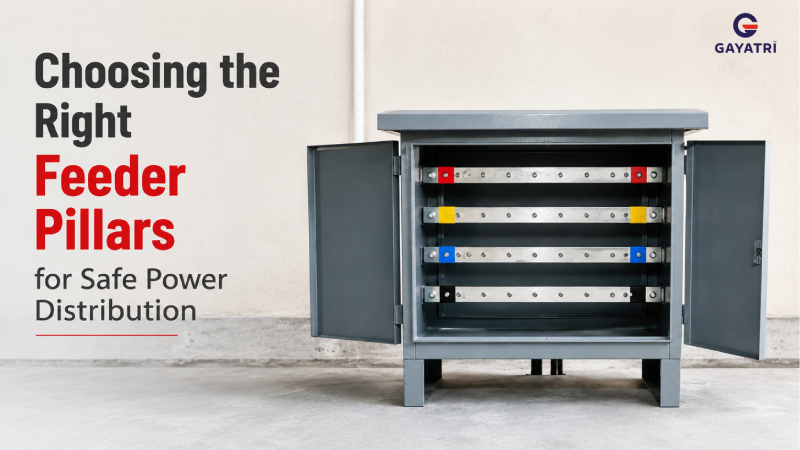
A feeder pillar is a type of enclosed electrical apparatus that contains switchgear, cables, and distribution equipment that enable power to be safely pulled, monitored, and distributed to several feeder circuits. Imagine it as a point from which electricity from a main source is split and sent to various parts of a building, industrial plant or an outdoor installation like a street lighting network, or a construction site.
Feeder pillars are often installed in outdoor or exposed locations, and should be designed to resist dust, moisture, temperature fluctuations and sustained electrical duty without failure. With such significant consequences of improper construction, the choice of manufacturer should not be taken lightly, in the event of voltage leakage, overheating or even a complete circuit failure
Key Features to Look for in a Feeder Pillar
When considering feeder pillars for your project, there are a few technical aspects that actually contribute to the performance and lifespan of your project.
Current Rating and Voltage Handling
The electrical load at the application served by a feeder pillar must be easily managed by the electrical load. For heavy loads requiring a lot of power such as industrial and commercial applications, the units with a maximum current of up to 2000A and a system voltage of 440V AC are suitable for this purpose.
Insulation Voltage
Another factor which directly affects safety is the rated insulation voltage. A feeder pillar, of insulated voltage 690 Volt AC, is designed to provide adequate electrical isolation between components and minimize the chance of voltage leakage, thus ensuring safe operation even when used continuously.
Temperature Tolerance
India has varied climate conditions throughout, and electrical outdoor equipment has to withstand extreme temperatures without degrading. These feeder pillars are more reliable when ambient temperature is up to 50°C, which is ideal for coastal, desert and industrial belt areas that have a regular summer high temperature.
Degree of Protection (IP Rating)
The degree of protection rating indicates the level of dust and water protection offered by an enclosure. An IP54-rated feeder pillar will exclude dust and splashing water, especially useful for those used outdoors, in areas of construction or exposed to weather and heavy foot traffic.
Applications of Feeder Pillars
Feeder pillars are used across a wide range of settings, including:
- Industrial parks and manufacturing units requiring segmented power distribution
- Commercial complexes and shopping centers with multiple electrical zones
- Street lighting and public infrastructure projects
- Residential townships and gated communities
- Construction sites needing temporary or semi-permanent power routing
- Utility companies managing regional power grids
All of these applications have different requirements for the equipment, so it’s important to work with a Best Feeder Pillars Manufacturer in India. A manufacturer with a good insight into the needs of the sector can be able to provide the optimum configuration rather than a one-size fits all solutions.
Why Quality Construction Matters
Feeder pillars are not a part of the system that requires regular replacement or repair after that installation. They are designed to last for many years and are frequently exposed to outdoor environments with limited access for maintenance. This calls for quality of build, material selection and correctness of design from the outset.
Units that are improperly made can experience problems like loose connections, poor insulation or corrosion of enclosures, which create serious safety hazards. However, a properly designed feeder pillar provides stable performance, minimizes unexpected outages and ensures operational safety across the entire feeder network it supplies over the life of the system.
How to Choose the Right Manufacturer
Selecting a feeder pillar supplier involves more than comparing price tags. Here are a few considerations worth keeping in mind:
Industry Experience: A manufacturer with decades of experience across sectors like oil and gas, railways, municipal infrastructure, and power utilities has likely encountered a wide variety of technical challenges and understands how to engineer around them.
Customization Capability: Every project has unique load requirements, space constraints, and environmental conditions. A manufacturer that can tailor specifications rather than pushing standard catalog units adds real value to your project.
Compliance and Testing: Reliable feeder pillars go through rigorous testing for insulation, current handling, and enclosure protection before they leave the factory floor.
After-Sales Support: Since these units are installed for the long term, having a manufacturer that offers guidance, spare parts, and technical support after installation is important for smooth operations down the line.
Track Record with Large-Scale Projects: A manufacturer that has supplied units for government bodies, industrial giants, or infrastructure projects typically brings a higher degree of technical maturity to the table.
Common Mistakes to Avoid When Selecting Feeder Pillars
Many buyers focus solely on upfront costs and overlook long-term reliability. Here are a few missteps worth avoiding:
- Ignoring environmental conditions: Choosing a unit without considering local temperature, humidity, or dust levels can shorten its operational life significantly.
- Overlooking future load growth: Selecting a feeder pillar based only on current requirements without accounting for future expansion can lead to costly upgrades later.
- Skipping technical consultation: Working with a supplier who doesn’t offer engineering input often results in a mismatch between the unit and the actual site requirements.
- Choosing based on price alone: The cheapest option is rarely the most reliable one when it comes to critical electrical infrastructure.
Avoiding these mistakes early in the planning stage can save significant time, money, and operational headaches later.
Final Thoughts on Making the Right Choice
Feeder pillars may not be the most visible part of an electrical installation, but they play a foundational role in keeping power distribution safe, organized, and efficient. Whether you are planning an industrial facility, a public infrastructure project, or a commercial complex, choosing the right equipment and the right manufacturer will directly influence how smoothly your electrical network performs over the years ahead.
If you are searching for the Best Feeder Pillars Manufacturer in India, it pays to evaluate technical specifications, environmental suitability, and manufacturing experience together rather than looking at any single factor in isolation. The right partner will not just supply a product but will help you engineer a solution that fits your specific site and load requirements.
Why Choose Us
Gayatri Private Limited brings decades of hands-on experience working across some of India’s most demanding sectors, including oil and gas, railways, municipal bodies, and large-scale power infrastructure projects, giving the company a practical understanding of what real-world power distribution equipment needs to withstand. This experience shapes every unit built, with attention given to load handling, insulation safety, and durability under varied environmental conditions. Choosing Gayatri Private Limited means partnering with a team that has been tested by large, complex projects rather than one working only from a catalog. For anyone comparing a Feeder Pillars Manufacturer in India, this track record of sector diversity and technical depth offers a meaningful point of difference, backed by a genuine commitment to safe and dependable power distribution for every client.
Conclusion
Feeder pillars form a vital link in any power distribution setup, protecting circuits while ensuring organized, safe electricity flow to multiple points. Features such as current rating, insulation voltage, temperature tolerance, and IP protection determine how well a unit performs in real conditions. Working with an experienced supplier who understands sector-specific demands makes a measurable difference in long-term performance. Careful evaluation during the selection process, rather than a rushed decision, ultimately protects your infrastructure investment and supports uninterrupted operations for years, keeping facilities running smoothly with dependable, well-engineered power distribution equipment.
Want to know more about our feeder pillars or discuss your power distribution project? Call us at +91 9375065185 or email marketing@gayatrigroup.org
Frequently Asked Questions
What are feeder pillars and why are they important in power distribution?
Feeder pillars are enclosed electrical devices that distribute power from a main source to multiple outgoing circuits. They are crucial for ensuring organized and safe electrical distribution, improving maintenance, and minimizing risks associated with improper power management.
How do I choose the best feeder pillars manufacturer in India?
When selecting a feeder pillars manufacturer in India, prioritize experience in the industry, customization capabilities, compliance with safety standards, and after-sales support. Evaluate their track record with large-scale projects to ensure they can meet your specific electrical distribution needs.
What features should I look for in feeder pillars?
Key features of feeder pillars include current rating, insulation voltage, temperature tolerance, and IP protection rating. These aspects directly impact performance, safety, and longevity, ensuring the units can withstand environmental conditions and heavy electrical loads.
What are common mistakes to avoid when selecting feeder pillars?
Common mistakes include ignoring environmental conditions, overlooking future load growth, and choosing based on price alone. It’s essential to consult with a knowledgeable supplier to ensure the unit matches site requirements and to plan for potential future needs.
Why is quality construction important for feeder pillars?
Quality construction is vital because feeder pillars are designed for long-term use in outdoor environments. Poorly constructed units can lead to serious safety hazards like voltage leakage or overheating, while quality pillars ensure stable performance and minimize unexpected outages.